
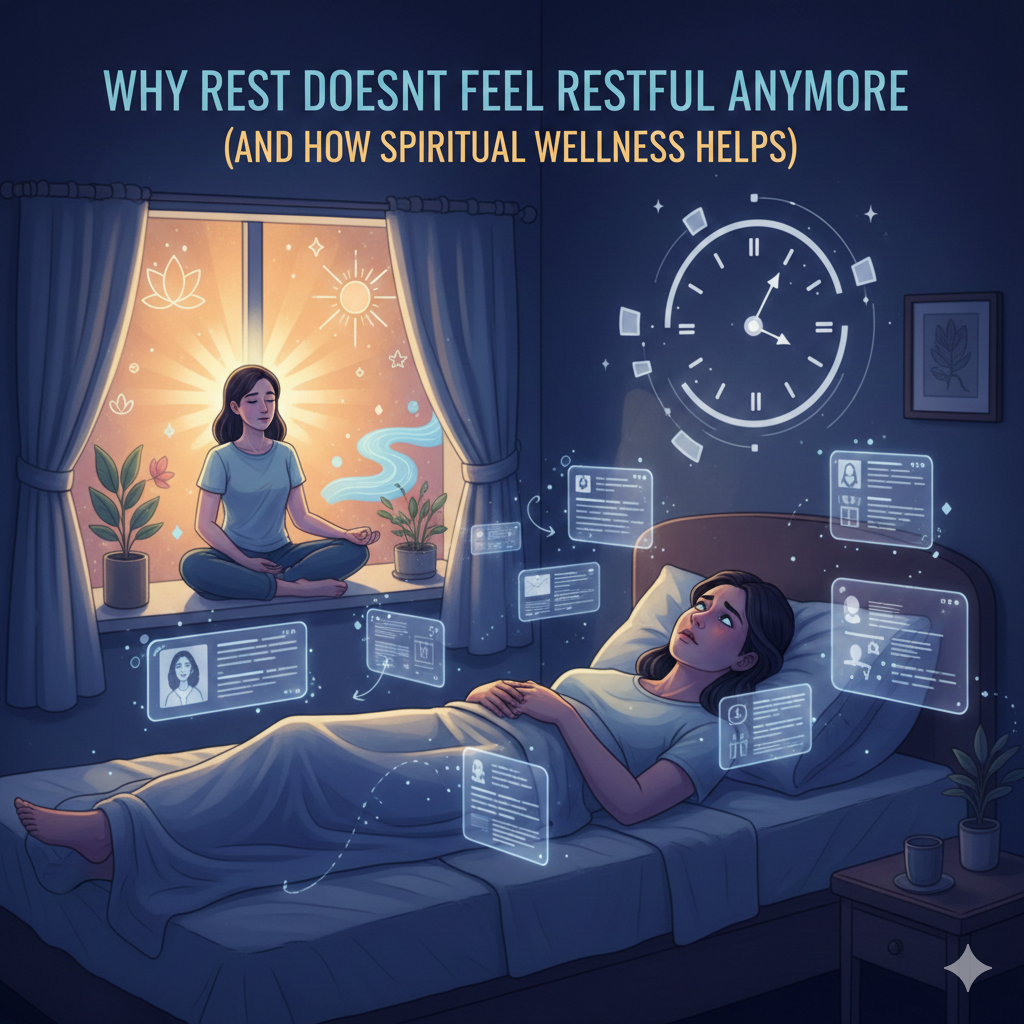
Many people rest more than ever, yet feel more exhausted than before. Sleep hours may be sufficient, weekends may be free, and even vacations may happen, but the feeling of renewal is missing. The body pauses, but the mind continues running. This creates a confusing situation where rest no longer feels restorative.
People often assume they need more sleep, more breaks, or better routines. While these help physically, they do not always address the deeper issue. Exhaustion today is often mental and emotional, not physical. Spiritual wellness looks at rest from a deeper perspective and explains why true rest requires inner calm, not just physical inactivity.
Understanding this difference helps people recover energy in a more natural and sustainable way.
Table of Contents
TogglePhysical Rest vs Inner Rest
Physical rest allows the body to recover. Inner rest allows the mind to settle.
In modern life, people often stop moving but do not stop thinking. The body may be lying down, but thoughts continue to replay conversations, plan the future, or analyze problems. When this happens, the nervous system stays active even during rest.
Spiritual wellness emphasizes that rest is incomplete without mental and emotional stillness. True restoration happens when both body and mind feel safe enough to relax.
This is why rest often feels incomplete even when life appears stable and routines are healthy. The issue usually goes beyond physical tiredness and points toward spiritual wellness, where inner calm, emotional balance, and awareness play a deeper role in how truly rested a person feels.
Why the Mind Doesn’t Switch Off Even When You Rest
Several habits prevent the mind from resting.
Constant digital exposure keeps the brain alert. Even passive scrolling stimulates attention and comparison. Emotional backlog is another factor. Feelings that were never processed remain active beneath the surface.
Overthinking becomes a habit when the mind is used to constant problem solving. Without awareness, the mind continues this pattern even when rest is intended.
Finally, lack of silence prevents reset. Silence is not empty. It allows the nervous system to recalibrate.
Ongoing restlessness is often connected to unresolved inner tension. This is closely related to feeling anxious without a clear reason, where emotional unease appears even when the body is resting.
How Overstimulation Creates Ongoing Fatigue
Modern environments rarely allow mental quiet. Background noise, notifications, and information overload keep attention scattered. This prevents deep rest.
When the mind is overstimulated:
Thoughts become repetitive
Focus weakens
Emotional sensitivity increases
Rest feels shallow
Spiritual wellness encourages reducing unnecessary stimulation to allow inner calm to return naturally.
Spiritual Wellness and the Meaning of True Rest
True rest is not inactivity. It is inner ease.
Spiritual wellness teaches that rest happens when there is no resistance inside. When thoughts are allowed to come and go without engagement, mental tension reduces. This does not require effort. It requires awareness.
True rest includes:
Inner stillness
Letting go of control
Observing without reacting
When the mind feels safe, energy restores on its own.
Why Trying to “Force Relaxation” Often Fails
Many people try to relax by forcing techniques or expecting immediate calm. This effort itself creates tension.
Spiritual wellness suggests allowing rest rather than demanding it. When rest is approached gently, without pressure, the nervous system responds more positively.
Letting go of expectations is often the first step toward real rest.
Signs You Are Experiencing Real Rest
As inner rest develops, subtle changes appear.
Common signs include:
Waking up with a calmer mind
Reduced mental chatter
Emotional lightness
Less irritability
Improved focus during the day
These signs indicate that rest is reaching deeper levels.
How Spiritual Wellness Restores Energy Naturally
Energy is not only physical. It is also emotional and mental.
When inner tension reduces, energy becomes available again. Spiritual wellness restores energy by:
Reducing mental resistance
Creating emotional safety
Encouraging presence
As awareness increases, exhaustion reduces without forcing recovery.
Daily Habits That Support Inner Rest
You do not need a new routine. Small changes are enough.
Helpful habits include:
Moments of silence
Allow short pauses during the day without stimulation.
Awareness during routine tasks
Pay attention to simple actions like walking or breathing.
Reducing mental clutter
Limit unnecessary multitasking and background noise.
Gentle breathing awareness
Notice breath without controlling it.
These habits invite rest instead of chasing it.
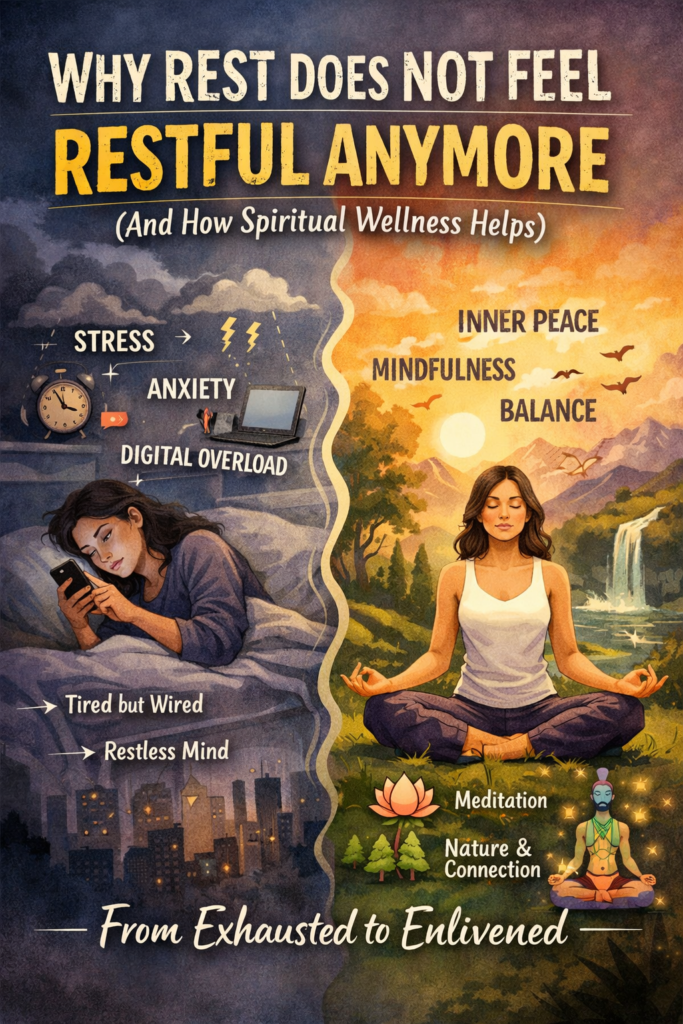
Rest, Awareness, and Emotional Balance
Inner rest improves emotional regulation. When the mind is calm, emotions flow naturally without overwhelming reactions.
This leads to:
Better stress tolerance
Reduced emotional fatigue
Increased patience
Spiritual wellness creates a stable inner environment where rest becomes deeper and more effective.
How Spiritual Wellness Restores True Restfulness
Inner rest improves emotional regulation. When the mind is calm, emotions flow naturally without overwhelming reactions.
This leads to:
Better stress tolerance
Reduced emotional fatigue
Increased patience
Spiritual wellness creates a stable inner environment where rest becomes deeper and more effective.
How This Connects to Spiritual Wellness as a Whole
Difficulty resting is a common sign of spiritual imbalance. Addressing it strengthens overall spiritual wellness.
As inner rest improves:
Anxiety decreases
Focus improves
Emotional resilience grows
Rest becomes a natural state rather than something to schedule.
Conclusion
When rest no longer feels restful, the issue is rarely lack of time. It is lack of inner calm. Modern life keeps the mind active even when the body stops, preventing true restoration.
Spiritual wellness offers a gentle solution. By reducing resistance, increasing awareness, and allowing moments of stillness, rest deepens naturally. Energy returns without force, and calm becomes more accessible.
True rest is not about doing less. It is about being present enough to let the mind settle. When inner rest is restored, life feels lighter, clearer, and more balanced.
Long before modern discussions on burnout, reflective traditions emphasized observing the mind without resistance. This focus on inner awareness, often explored in Shiva Wisdom, highlights how calm comes from understanding rather than control
FAQs – Why Rest Doesn’t Feel Restful Anymore
Why do I feel tired even after resting or sleeping?
Feeling tired after rest usually happens when the mind remains active even while the body stops. Mental overthinking, emotional stress, and constant stimulation prevent deep inner rest, making sleep or breaks feel ineffective.
Is exhaustion always related to lack of sleep?
No. Many people get enough sleep but still feel drained. Exhaustion today is often emotional or mental rather than physical, caused by stress, information overload, and lack of inner calm.
What is the difference between physical rest and inner rest?
Physical rest relaxes the body, while inner rest calms the mind and emotions. Without inner rest, physical rest alone cannot fully restore energy.
Why doesn’t relaxing or taking a vacation always help?
Changing location or routine helps the body, but if mental patterns stay the same, exhaustion returns quickly. Inner rest depends on awareness, not surroundings.
How does spiritual wellness help with feeling constantly tired?
Spiritual wellness reduces mental resistance, emotional overload, and inner tension. By cultivating awareness and calm, it allows the nervous system to recover naturally.
Can overthinking prevent real rest?
Yes. Overthinking keeps the brain in problem-solving mode, even during rest. This prevents the nervous system from entering a restorative state.
How can I experience deeper rest without changing my routine?
Simple practices like moments of silence, awareness of breath, reducing stimulation, and observing thoughts without reacting can significantly improve inner rest.
How long does it take to feel the effects of inner rest?
Small improvements can appear within days. Deeper calm and sustained energy usually develop over a few weeks with consistent awareness.
Is spiritual rest connected to emotional balance?
Yes. When the mind is calm, emotions flow more smoothly. Inner rest improves patience, reduces irritability, and supports emotional stability.
Do I need meditation or rituals to experience real rest?
No. Spiritual wellness focuses on awareness and presence. No belief system, ritual, or structured practice is required.
Recent Posts
- Why Rest Does not Feel Restful Anymore (And How Spiritual Wellness Helps)
- Why You Feel Anxious Without Any Clear Reason (A Spiritual Wellness Perspective)
- Spiritual Wellness Explained: What It Is and Why It Matters Today
- Om Namah Shivaya: The Powerful Shiva Mantra and Its Significance
- The Glory of the Shiv Purana: Spiritual Meaning and Life Lessons Explained