
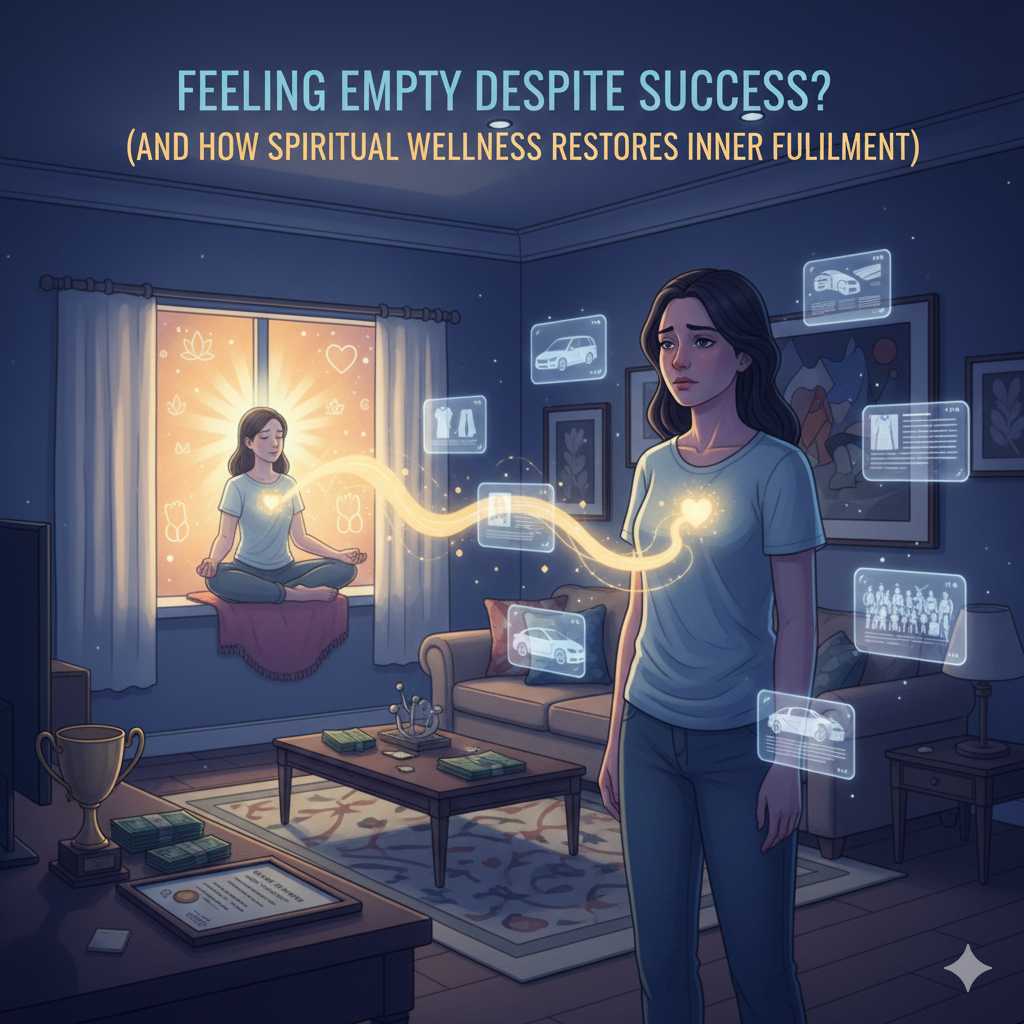
Success is often presented as the ultimate solution to dissatisfaction. Achieve your goals, build stability, improve your lifestyle, and fulfillment is supposed to follow naturally. Yet many people reach milestones they once dreamed of and still feel an uncomfortable sense of emptiness inside. This feeling is confusing because, on the surface, everything seems to be going well.
People hesitate to talk about this emptiness because it feels ungrateful or unjustified. They may wonder why happiness feels temporary or why motivation fades so quickly after success. This inner disconnect is more common than most people realize. It does not mean something is wrong with you or that your success is meaningless.
From a spiritual wellness perspective, emptiness after success is a sign of inner misalignment, not failure. Understanding this helps restore fulfillment by reconnecting with meaning rather than chasing the next achievement.
Why Success Alone Does Not Create Fulfillment
Success focuses on external outcomes. Fulfillment comes from inner alignment. When goals are reached, the mind experiences a short burst of satisfaction, but this feeling fades because it depends on conditions staying favorable.
Modern culture often links identity to performance. People begin to define themselves by productivity, income, status, or recognition. When success becomes the main source of self worth, fulfillment remains fragile. Each achievement raises expectations for the next one, creating a cycle of striving without lasting contentment.
Spiritual wellness explains that fulfillment cannot be sustained by results alone. Without inner connection, success becomes something to maintain rather than enjoy. This sense of emptiness often points to a deeper need for inner balance and awareness, rather than external achievement alone.
The Difference Between Happiness and Fulfillment
Happiness is often reactive. It comes and goes based on circumstances. Fulfillment is stable. It exists regardless of external changes.
A person may feel happy after achieving a goal but feel empty shortly afterward. Fulfillment, on the other hand, comes from feeling aligned with values, purpose, and inner truth. Spiritual wellness focuses on this deeper layer of wellbeing.
When fulfillment is missing, success feels incomplete. When fulfillment is present, success becomes meaningful rather than exhausting.
Signs of Inner Emptiness Despite Success
Inner emptiness does not always appear dramatically. It often shows up quietly. Emotional emptiness and constant tiredness often appear together. This connection is explored in why rest does not feel restful anymore, where inner exhaustion persists despite external comfort.
Common signs include:
Feeling disconnected from achievements
Loss of excitement after reaching goals
Constant need for distraction or stimulation
Emotional flatness or numbness
Questioning “Is this all there is?”
These signs are not signs of failure. They are signals that the inner self needs attention.
How Spiritual Wellness Explains Inner Emptiness
Spiritual wellness views emptiness as a lack of connection rather than a lack of achievement. When attention is focused only outward, the inner world becomes neglected.
Many people spend years moving from one goal to the next without pausing to ask whether those goals reflect their true values. Over time, this creates a gap between who they are and what they are pursuing. Emptiness arises from this gap.
Spiritual wellness restores connection by encouraging awareness of inner needs, emotions, and meaning. Many people who feel empty after achieving success also experience a quiet form of inner restlessness that doesn’t have an obvious cause.
Reconnecting With Meaning Through Spiritual Wellness
Spiritual wellness does not ask you to give up ambition. It helps you understand why you are pursuing certain goals and whether they align with who you are.
Reconnection begins with:
Awareness of personal values
Reflection on motivations
Presence in everyday experiences
When meaning is restored, fulfillment no longer depends solely on outcomes. Life begins to feel richer, even without constant achievement.
Shifting From Achievement to Alignment
Achievement asks “What should I accomplish next?”
Alignment asks “Does this feel right for me?”
This shift does not reduce success. It improves its quality. Aligned goals feel energizing rather than draining. They create satisfaction during the process, not just at the finish line.
Spiritual wellness supports this shift by helping people listen inward rather than relying only on external validation.
Why Constant Busyness Increases Emptiness
Busyness often masks inner discomfort. Staying occupied prevents reflection, but it also prevents fulfillment.
When people slow down, emptiness sometimes becomes more noticeable. This can be uncomfortable, but it is also an opportunity. Spiritual wellness encourages slowing down not to escape, but to reconnect.
Silence and reflection allow people to rediscover what truly matters to them.
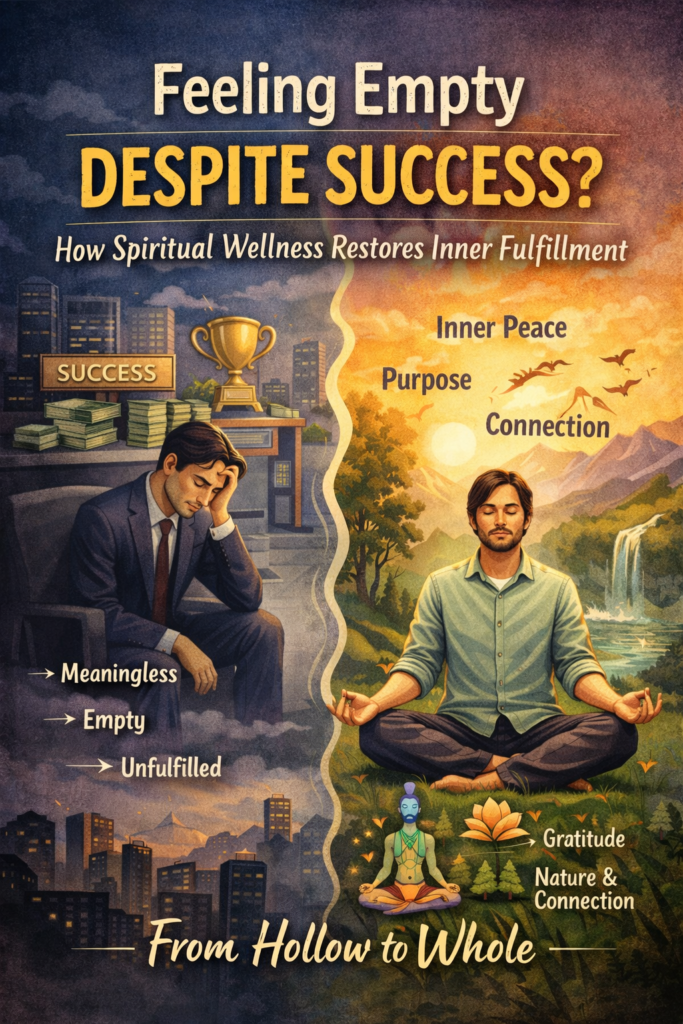
Practical Steps to Rebuild Inner Fulfillment
You do not need to change your life overnight. Small shifts are enough.
Helpful steps include:
Creating short moments of silence daily
Reflecting on what feels meaningful, not just productive
Reducing comparison with others
Noticing emotions instead of avoiding them
These steps gently rebuild inner connection.
Fulfillment and Long Term Success
When fulfillment is restored, success becomes sustainable. People experience motivation without burnout and ambition without emptiness.
Spiritual wellness does not replace success. It supports it by grounding achievement in purpose and clarity.
This balance allows life to feel whole rather than fragmented.
How This Connects to Spiritual Wellness as a Whole
Inner emptiness is one of the clearest signs of spiritual imbalance. Addressing it strengthens overall spiritual wellness.
As fulfillment grows:
Anxiety reduces
Decision making improves
Emotional resilience increases
Spiritual wellness creates a stable inner foundation that supports all areas of life.
Conclusion
Feeling empty despite success is more common than most people admit. It does not mean success was the wrong goal. It means fulfillment requires more than achievement alone.
Spiritual wellness offers a way to reconnect with meaning, values, and inner awareness. By shifting focus from constant striving to alignment, fulfillment begins to return naturally.
Success becomes something you experience fully rather than something you chase endlessly. With awareness and patience, inner richness replaces emptiness, creating a sense of completeness that external success alone cannot provide.
Ancient teachings rooted in reflective spiritual wisdom remind us that fulfillment comes from alignment, not accumulation.
FAQs
Why do I feel empty even after achieving success?
Feeling empty after success usually happens when achievements are not aligned with inner values. External success can bring temporary satisfaction, but fulfillment comes from meaning, awareness, and inner connection.
Is it normal to feel unfulfilled despite having a good life?
Yes. Many people feel unfulfilled even when life looks stable from the outside. This does not mean something is wrong. It often signals a need for deeper inner alignment and reflection.
Can spiritual wellness really restore inner fulfillment?
Yes. Spiritual wellness helps people reconnect with their values, emotions, and sense of meaning. This inner connection restores fulfillment that external achievements alone cannot provide.
What is the difference between success and fulfillment?
Success is based on external outcomes like goals and achievements. Fulfillment is an inner state of alignment, purpose, and emotional balance that does not depend on constant achievement.
Why does motivation fade after achieving goals?
Motivation often fades because the mind adapts quickly to achievements. Without inner meaning, goals provide only temporary satisfaction, leading to emptiness once they are reached.
Do I need to change my career or lifestyle to feel fulfilled?
Not necessarily. Fulfillment usually comes from changing perspective and awareness rather than making drastic external changes. Spiritual wellness focuses on inner alignment, not external replacement.
How long does it take to regain inner fulfillment?
Some people notice small shifts within days of increased awareness. Deeper fulfillment develops gradually over weeks as inner connection and reflection become consistent.
Is inner emptiness related to mental health issues?
This article discusses emptiness from a spiritual wellness perspective, not a medical one. If emptiness feels overwhelming or persistent, professional guidance can be helpful alongside inner awareness.
What is the first step to feel fulfilled again?
The first step is awareness. Noticing your feelings without judgment and reflecting on what truly matters to you helps begin the process of restoring inner fulfillment.
Recent Posts
- Shiv Tandav Stotram Lyrics in Sanskrit and Hindi With English Meaning & Benefits(शिव तांडव स्तोत्र सरल भाषा में)
- Feeling Empty Despite Success? How Spiritual Wellness Restores Inner Fulfillment
- Mahamrityunjay Mantra (Om Tryambakam Yajamahe): Meaning, Benefits & How to Chant
- Why Rest Does not Feel Restful Anymore (And How Spiritual Wellness Helps)
- Why You Feel Anxious Without Any Clear Reason (A Spiritual Wellness Perspective)