
Modern life has made people busier than ever. Schedules are full, notifications never stop, and productivity is often seen as success. Yet despite this constant activity, many people feel emotionally drained, mentally cluttered, and disconnected from themselves. Burnout, restlessness, and silent anxiety have become common experiences, even among those who appear successful on the outside.
Wellness is often discussed in terms of physical fitness or mental health. While both are important, they do not fully address the deeper sense of imbalance many people feel today. This is where spiritual wellness becomes essential. It is not about religion or belief systems. It is about inner grounding, clarity, and emotional stability in a fast moving world.
Spiritual wellness helps people slow down internally, understand themselves better, and feel calm even when life feels uncertain.
This guide explains what spiritual wellness really means, how it affects daily life, and how anyone can begin practicing it without changing beliefs or routines.
What Is Spiritual Wellness?
Spiritual wellness is the state of being connected to your inner self. It reflects how aligned you feel with your values, emotions, and sense of purpose. When spiritually well, people experience clarity, inner calm, and emotional balance that does not depend on external circumstances.
It is not something you achieve through external achievements or material comfort. Instead, it develops through awareness and self understanding. Spiritual wellness allows people to stay centered even when situations around them are unpredictable.
Important points to understand:
It is not about rituals
It is not about religion
It is about inner stability and awareness
Simple Definition
Spiritual wellness is the ability to stay connected to your inner values, emotions, and sense of purpose, even during uncertainty.
Spiritual Wellness vs Mental Wellness vs Emotional Wellness
These three are often confused, but they serve different roles in overall wellbeing.
Mental wellness relates to thoughts, focus, learning, and problem solving.
Emotional wellness relates to feelings, moods, and emotional reactions.
Spiritual wellness relates to meaning, perspective, and inner alignment.
A Simple Example
Two people face the same stressful situation at work.
One becomes overwhelmed, anxious, and reactive.
The other feels the pressure but responds calmly and thoughtfully.
The difference is not intelligence or emotion. It is spiritual grounding. Spiritual wellness helps people step back, gain perspective, and respond rather than react.
Why Spiritual Wellness Matters More Than Ever Today
The modern world constantly pulls attention outward. Digital devices, social media, and nonstop information leave little room for silence or reflection. People are encouraged to compare, achieve, and stay busy, often at the cost of inner balance.
Common realities today include:
Digital overload without mental rest
Constant comparison leading to dissatisfaction
Productivity without fulfillment
Burnout despite external success
Many people feel disconnected even when life looks stable. Anxiety appears without a clear cause. There is restlessness despite comfort. Spiritual wellness helps fill this invisible gap by reconnecting individuals with meaning and presence.
Many people struggle to relax even after sleep or breaks, which is explained further in why rest does not feel restful anymore, showing how inner imbalance affects recovery beyond physical fatigue.
This is why spiritual wellness resonates globally. It addresses a universal need for calm, clarity, and inner stability.
Common Signs Your Spiritual Wellness Is Imbalanced
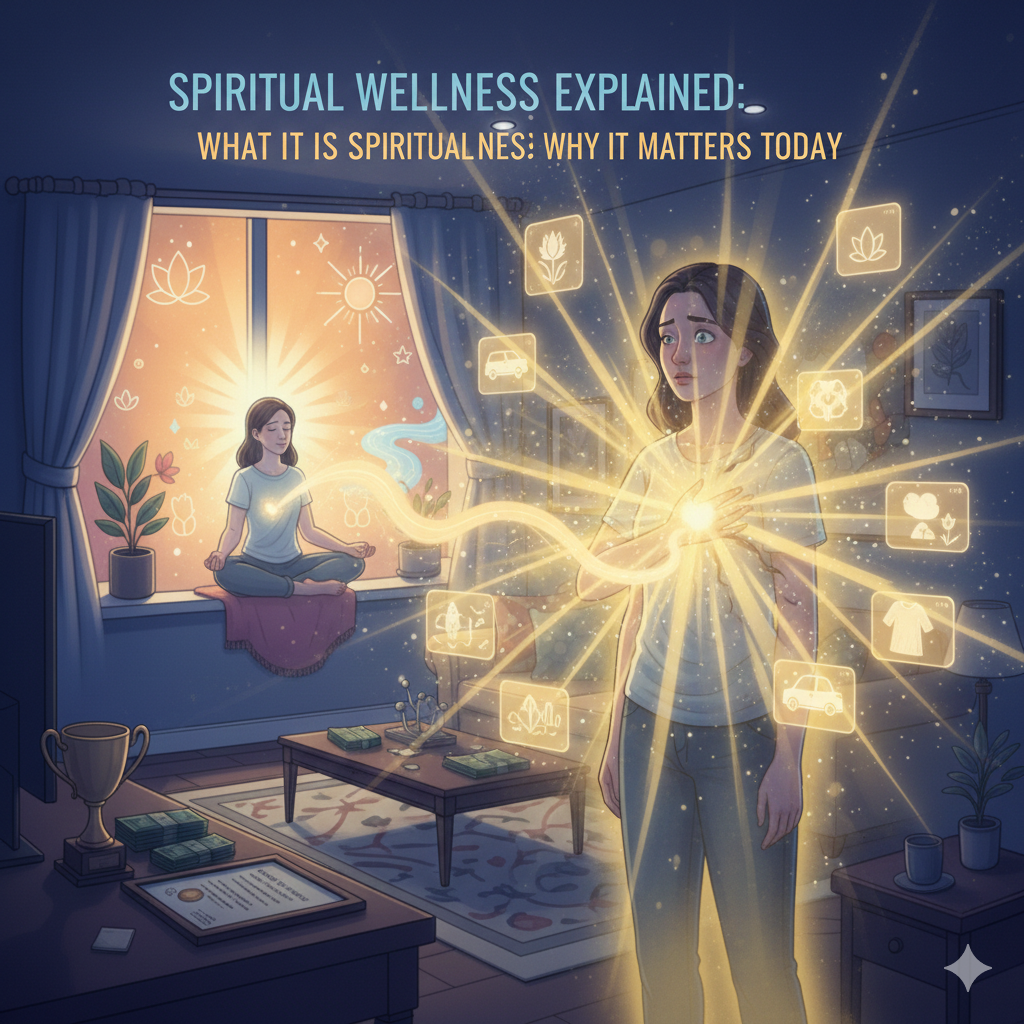
An imbalance in spiritual wellness often shows up subtly. People may not immediately recognize the cause, but the signs are familiar. A common modern struggle explored in spiritual wellness is success without fulfillment, where outer growth outpaces inner alignment.
Common indicators include:
Feeling drained without a physical reason
Loss of motivation despite having goals
Overthinking simple decisions
Emotional numbness or detachment
Constant mental noise and restlessness
These signs are common and reversible. They do not indicate failure or weakness. They simply signal a need for inner reconnection.
Many people experience restlessness or anxiety even when life appears stable. This is explored further in why you feel anxious without any clear reason, which explains how inner imbalance can create emotional unease without obvious external triggers.
Benefits of Strong Spiritual Wellness
Inner Calm and Emotional Stability
True calm does not come from controlling life. It comes from understanding it. Spiritual wellness helps people stay emotionally balanced by changing how they relate to situations rather than trying to control outcomes.
Better Decision Making
When inner clarity improves, decisions become simpler. People rely less on fear and confusion and more on intuition and awareness. This reduces regret and mental exhaustion.
Improved Relationships
Spiritual wellness encourages empathy and patience. It creates emotional space, making it easier to listen, understand, and respond thoughtfully in relationships.
Resilience During Uncertainty
Life is unpredictable. Spiritual wellness strengthens the ability to accept change without resistance. This adaptability builds resilience and emotional strength.
Many seekers consider energy healing through Shakti Peethas an important part of their spiritual wellness journey, supporting emotional balance and inner clarity.
Simple Daily Practices That Improve Spiritual Wellness
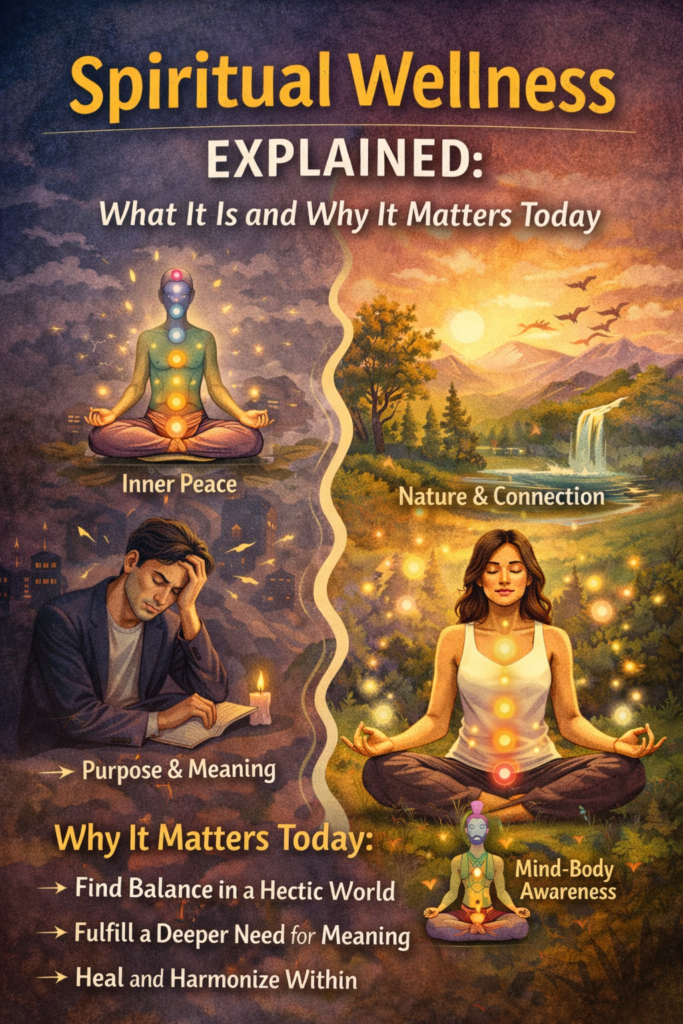
Spiritual wellness develops through simple, consistent actions. No special tools or practices are required.
Helpful daily habits include:
Silent observation: Spending a few minutes noticing thoughts without judgment
Breath awareness: Paying attention to natural breathing to calm the nervous system
Gratitude reflection: Acknowledging small positives each day
Digital pauses: Creating short breaks from screens
Nature connection: Spending time outdoors to reset mentally
These practices gently reduce mental noise and increase inner awareness. Ancient Shiva chants, such as the Shiv Tandav Stotram, are often used as spiritual tools to restore balance, focus, and emotional clarity.
Spiritual Wellness in Modern Life (Work, Family, Stress)
Spiritual wellness has practical benefits in everyday life.
At work:
Reduces stress and burnout
Improves focus and clarity
Helps manage pressure calmly
In family and relationships:
Reduces emotional reactivity
Improves communication
Encourages patience and understanding
In stressful situations:
Promotes responding instead of reacting
Helps maintain calm during uncertainty
Builds emotional balance under pressure
These benefits make spiritual wellness relevant in all aspects of modern life.
Spiritual Wellness and Inner Growth
Spiritual wellness supports inner growth by encouraging self awareness and emotional maturity. It helps people recognize ego driven reactions and replace them with understanding.
Over time, this leads to:
Letting go of unnecessary emotional reactions
Greater self acceptance
Stronger emotional intelligence
Spiritual wellness becomes a form of inner leadership, guiding choices and responses from a place of clarity.
How to Begin Your Spiritual Wellness Journey Today
Starting does not require major changes. Small steps are enough.
Create moments of daily silence
Observe thoughts without judging them
Reduce unnecessary mental noise
Reflect before reacting
Stay consistent with simple practices
Progress comes from awareness, not perfection.
Related Paths to Explore
- Readers interested in inner awareness can explore Shiva Wisdom
-
Those seeking sacred sound and deeper meaning may explore Shiva Mantra
-
Those curious about symbolic guidance may explore Angel Numbers
-
Goal focused readers can explore Manifestation
-
Personality and timing seekers may explore Zodiac Signs
These paths offer different perspectives for inner exploration.
Conclusion
Spiritual wellness is not about escaping life or adopting new beliefs. It is about learning to live with clarity, balance, and awareness in the middle of everyday challenges. In a world filled with noise and pressure, spiritual wellness offers a way to reconnect with calm and meaning.
By developing awareness and inner stability, people learn to respond thoughtfully rather than react emotionally. Over time, this creates peace, resilience, and emotional strength.
Spiritual wellness is not about becoming someone new.
It is about returning to clarity, balance, and awareness that already exists within you.
FAQs About Spiritual Wellness
What is spiritual wellness in simple words?
Spiritual wellness means being aware of your inner self and staying connected to what gives your life meaning. It helps you feel calm, balanced, and grounded even when external situations are stressful or uncertain.
Is spiritual wellness the same as religion?
No. Spiritual wellness is not related to religion or belief systems. It focuses on inner awareness, emotional balance, and personal values. Anyone can practice spiritual wellness regardless of faith or cultural background.
Why is spiritual wellness important in daily life?
Spiritual wellness helps people manage stress, make clearer decisions, and stay emotionally stable. It provides inner calm and perspective, which is especially important in modern life filled with pressure, distractions, and constant change.
What are the signs of poor spiritual wellness?
Common signs include feeling emotionally drained without reason, constant overthinking, lack of motivation, inner restlessness, and feeling disconnected despite external success. These signs are common and can be improved with awareness and simple practices.
How does spiritual wellness improve mental health?
Spiritual wellness supports mental health by reducing inner conflict and overthinking. When people feel aligned internally, their thoughts become calmer, which helps reduce anxiety, stress, and emotional exhaustion.
Can spiritual wellness help with stress and anxiety?
Yes. Spiritual wellness helps people respond to stress with clarity rather than panic. It encourages presence, perspective, and emotional balance, which naturally reduces anxiety and mental overload.
Do I need meditation or rituals for spiritual wellness?
No. Spiritual wellness does not require meditation, chanting, or rituals. Simple practices like reflection, silence, breath awareness, and reducing mental noise are enough to begin.
How long does it take to feel the benefits of spiritual wellness?
Some people notice small changes within a few days, such as improved calm or clarity. Deeper emotional balance and long term benefits usually develop over weeks with consistent awareness.
Can spiritual wellness improve relationships?
Yes. Spiritual wellness encourages empathy, patience, and emotional space. This helps people communicate better, respond calmly, and build healthier relationships.
Is spiritual wellness suitable for busy professionals?
Absolutely. Spiritual wellness is especially helpful for busy professionals because it does not require extra time. It helps manage pressure, improve focus, and maintain emotional balance during demanding schedules.
How can beginners start practicing spiritual wellness today?
Beginners can start by creating small moments of silence, observing thoughts without judgment, reducing unnecessary digital distractions, and reflecting before reacting. Consistency matters more than technique.
Is spiritual wellness a lifelong practice?
Yes. Spiritual wellness grows over time as awareness deepens. It is not about achieving a final state but about continuously staying connected to inner clarity and balance.
Recent Posts
- Kubera Mantra for Wealth — The Ancient Shiva-Blessed Mantra That Attracts Financial Abundance
- Angel Numbers for Career Growth and Promotion: What Repeating Numbers Mean for Professional Success
- Angel Numbers for Money: What Repeating Numbers Mean for Wealth, Career, and Financial Breakthroughs
- Angel Numbers Explained: Meaning, Patterns, and Why You Keep Seeing Them
- 10 Most Powerful Shiva Mantras for Wealth, Success, and Positive Energy — With Meanings and Benefits